The Best MTB Hubs in South Africa (2026)
The hub is the quiet hero of a mountain bike wheel — it sets how instantly the bike drives forward when you stamp on the pedals, how long the wheel survives wet, gritty South African trails, and how easily it’s serviced. The headline number is engagement: the points of engagement (POE) that decide how far the cranks rotate before the freehub bites, from Shimano’s relaxed pawls to Industry Nine’s near-instant Hydra. We ranked eight rear hubs on engagement, weight, durability and live rand value. One honest note: hubs are sold as separate FRONT and REAR units — every pick and price below is for the rear hub (the one with the ratchet), so budget for a matching front hub too, and confirm the freehub driver (Shimano HG/Microspline or SRAM XD) and axle spacing (most modern MTBs are Boost 148×12) for your wheel.
DT Swiss 350
Shimano XT FH-M8100
Shimano SLX FH-M7110
Compare all 8
Ranked by BikeBuy Score- #1
DT Swiss 350
Best All-RounderRiders who want bombproof reliability and the easiest service going.
Engagement7.5Weight7.8Durability & bearings9.5Driver & fitment9.5Value (live price)7.68.1/ 10Find it—Check marketplace - #2
Shimano XT FH-M8100
Best ValueRiders who want proven Shimano reliability for very little money.
Engagement6.0Weight6.1Durability & bearings8.5Driver & fitment7.5Value (live price)9.67.8/ 10Find it—Check marketplace - #3
Novatec (rear)
Budget pickFirst wheel build or a knock-about spare on a tight budget.
Engagement5.5Weight6.4Durability & bearings7.0Driver & fitment8.0Value (live price)9.97.7/ 10Find it—Check marketplace - #4
Shimano SLX FH-M7110
Best BudgetThe cheapest sensible 12-speed Microspline rear hub.
Engagement6.0Weight5.6Durability & bearings8.0Driver & fitment8.0Value (live price)9.57.7/ 10Find it—Check marketplace - #5
Hope Pro 5
Editors' ChoiceRiders who want fast engagement, serviceability and that famous Hope buzz.
Engagement8.5Weight7.7Durability & bearings9.0Driver & fitment9.0Value (live price)5.87.6/ 10Find it—Check marketplace - #6
Hope Pro 4
Proven valueRiders wanting the proven Hope build at a lower price than the Pro 5.
Engagement7.0Weight7.6Durability & bearings8.5Driver & fitment9.0Value (live price)6.77.4/ 10Find it—Check marketplace - #7
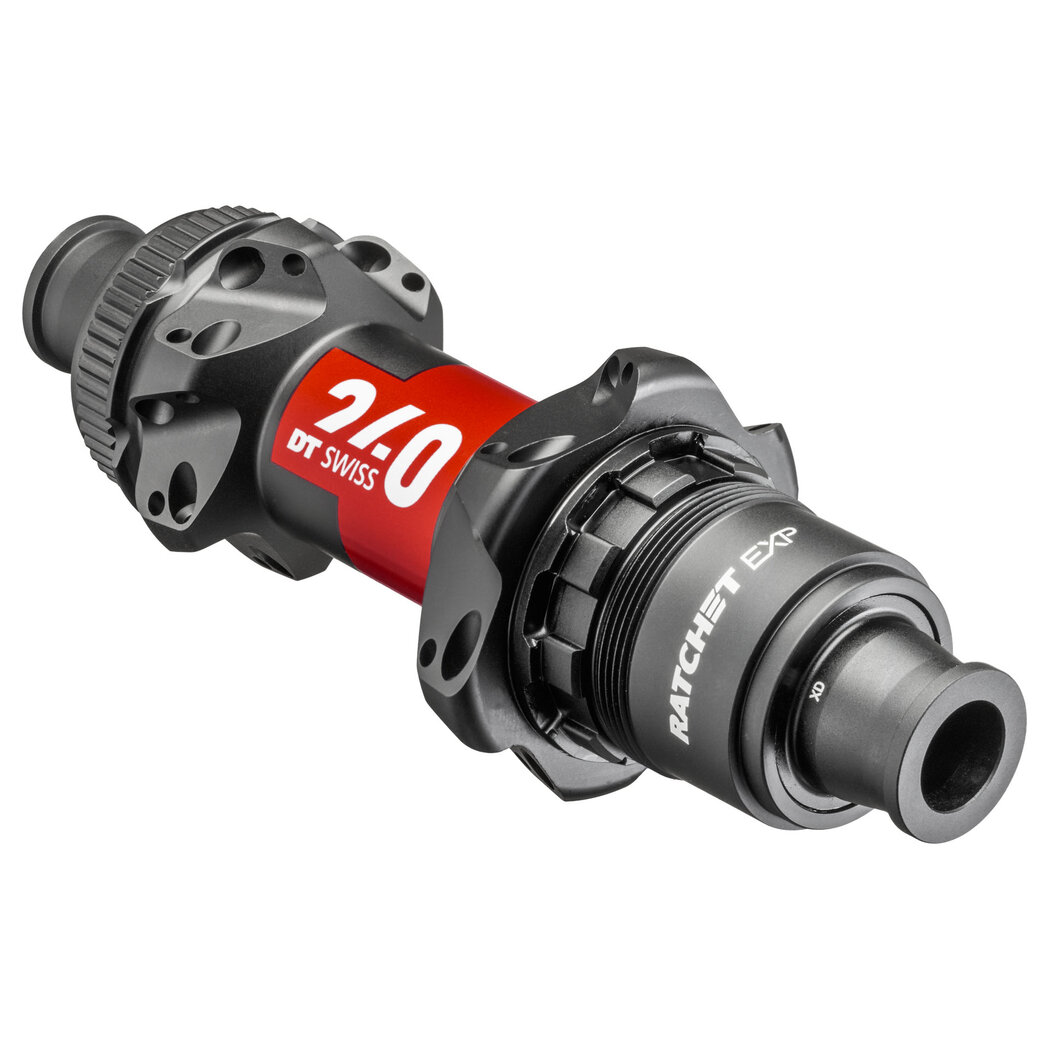
DT Swiss 240
Best LightweightWeight-conscious XC and down-country racers.
Engagement8.0Weight9.3Durability & bearings9.0Driver & fitment9.0Value (live price)4.57.2/ 10Find it—Check marketplace - #8
Industry Nine Hydra / Solix
Best EngagementTechnical-climb specialists who want near-instant pick-up.
Engagement10.0Weight7.6Durability & bearings8.5Driver & fitment8.5Value (live price)2.56.6/ 10Find it—Check marketplace
Score profiles
How each pick’s strengths stack up across our scoring axes. Tap a name to add or remove it.
The picks, in detail
DT Swiss 350
The DT Swiss 350 is the quiet benchmark: the Ratchet EXP drive has no pawls to break, the bearings shrug off filth, and you can service it on the trailside in minutes with no tools. It ships at 36-point engagement and upgrades to 54-point with a R-few-hundred ratchet swap. If you want a hub you’ll fit once and forget, this is it.
- Legendary reliability
- Tool-free service, no pawls
- Cheap 54-point engagement upgrade
- Stock 36-point engagement is modest
- Understated, quiet character
Specifications
- Engagement
- Ratchet EXP 36-point (54-point upgrade)
- Driver
- HG / Microspline / SRAM XD
- Axle
- Boost 148×12 (convertible)
- Claimed weight
- ~280 g (rear, manufacturer)
Shimano XT FH-M8100
Shimano’s XT rear hub is the value workhorse: cup-and-cone bearings that run beautifully when adjusted, Microspline 12-speed compatibility, and a price that undercuts the boutique hubs by a mile. Engagement is relaxed and it’s heavier than the racy options, but for sheer rand-for-reliability it’s very hard to beat.
- Outstanding value
- Smooth cup-and-cone bearings
- Widely available and serviceable in SA
- Relaxed engagement
- Microspline driver only; heavier
Specifications
- Engagement
- Pawl drive (modest POE)
- Driver
- Shimano Microspline (12-speed)
- Axle
- Boost 148×12
- Claimed weight
- ~340 g (rear, manufacturer)
Novatec (rear)
Novatec’s sealed-bearing rear hubs are the quiet backbone of countless budget and OEM wheels — unglamorous, but they spin freely and last far better than their price suggests. Engagement and finish are basic, but as the cheapest way onto a sealed-bearing hub it does the job.
- Lowest price here
- Sealed bearings
- Plenty of driver options
- Basic engagement and finish
- Less long-term durability than premium hubs
Specifications
- Engagement
- Pawl drive (basic POE)
- Driver
- HG / Microspline / SRAM XD options
- Axle
- Boost 148×12 / others
- Claimed weight
- ~330 g (rear, manufacturer)
Shimano SLX FH-M7110
SLX is XT’s value cousin — the same cup-and-cone reliability and Microspline 12-speed compatibility, a little heavier and plainer, for even less money. It’s the budget rebuild hub: pair it with a decent rim and you have a wheel that just keeps rolling.
- Lowest-cost 12-speed Microspline hub
- Reliable Shimano internals
- Easy to service
- Heaviest here
- Relaxed engagement
Specifications
- Engagement
- Pawl drive (modest POE)
- Driver
- Shimano Microspline (12-speed)
- Axle
- Boost 148×12
- Claimed weight
- ~360 g (rear, manufacturer)
Hope Pro 5
Hope’s Pro 5 jumps to a 108-point ratchet drive (up from the Pro 4’s pawls), so engagement is quick and the loud freehub buzz is as glorious as ever. It’s fully serviceable with hand tools, the bearings are tough, and the CNC’d British build feels like it’ll outlast the bike. Add easy driver and end-cap swaps and it’s the smart all-round rear hub for most trail riders.
- Quick 108-point engagement
- Tool-friendly, fully serviceable
- Tough bearings and seals
- Louder than some prefer
- Not the lightest
Specifications
- Engagement
- 108-point ratchet (~3.3°)
- Driver
- HG / Microspline / SRAM XD
- Axle
- Boost 148×12 (convertible)
- Claimed weight
- ~285 g (rear, manufacturer)
Hope Pro 4
The Pro 4 is the hub the Pro 5 replaced, and it remains a brilliant buy: a 44-point, four-pawl drive, the same serviceable CNC’d shell and the same trail-famous buzz. Engagement is a step behind the ratchet hubs, but it’s tough, easy to live with and often discounted now that the Pro 5 is here.
- Proven, serviceable Hope build
- Often well-priced now
- Easy driver/axle swaps
- Pawl engagement behind the Pro 5
- Loud freehub
Specifications
- Engagement
- 44-point, 4-pawl (~7.5°)
- Driver
- HG / Microspline / SRAM XD
- Axle
- Boost 148×12 (convertible)
- Claimed weight
- ~290 g (rear, manufacturer)
DT Swiss 240
The 240 is the 350’s lighter, more polished sibling — the same trustworthy Ratchet EXP drive and tool-free service, shaved down with higher-grade bearings for race-day weight. It typically ships at a higher engagement and is the hub of choice for XC builds that want reliability without the gram penalty.
- Light, race-ready
- Same tool-free Ratchet EXP service
- High-grade bearings
- Premium price over the 350
- Marginal real-world gain over the 350
Specifications
- Engagement
- Ratchet EXP 36/54-point
- Driver
- HG / Microspline / SRAM XD
- Axle
- Boost 148×12
- Claimed weight
- ~225 g (rear, manufacturer)
Industry Nine Hydra / Solix
Industry Nine’s Hydra drive offers an astonishing 690 points of engagement — effectively instant — so on ledgy, ratchet-y tech climbs the wheel drives the moment you load a pedal. The newer Solix carries the engagement banner forward. It’s premium money, but for riders who live on awkward technical terrain, nothing else feels this immediate.
- Near-instant 690-point engagement
- Superb on technical climbs
- Premium American build
- Expensive
- Many pawls = more service attention
Specifications
- Engagement
- Hydra 690-point (~0.52°)
- Driver
- HG / Microspline / SRAM XD
- Axle
- Boost 148×12
- Claimed weight
- ~290 g (rear, manufacturer)
Our awards
- Best All-Rounder DT Swiss 350
- Best Value Shimano XT FH-M8100
- Budget pick Novatec (rear)
- Best Budget Shimano SLX FH-M7110
- Editors' Choice Hope Pro 5
- Proven value Hope Pro 4
- Best Lightweight DT Swiss 240
- Best Engagement Industry Nine Hydra / Solix
How we score
- We score every rear hub on five axes — Engagement (25%), Value (35%), Weight (15%), Durability & bearings (15%) and Driver & fitment (10%) — then take the published weighted average for the BikeBuy Score. Drag the sliders to re-weight: engagement up for technical climbing, value up for the best buy.
- Engagement, Durability and Driver & fitment are editorial 0–10 judgements based on each hub’s drive mechanism (points of engagement), bearing/seal design and freehub options. They are our clearly-labelled opinion, not bench measurements.
- Weight is the manufacturer-claimed REAR-hub mass; front hubs are lighter and sold separately, so budget for both.
- Value is computed live from the cheapest current rear-hub price across SA retailers in the price tracker (freehub-body spare parts are excluded from the match). Thinly-stocked hubs show an approx RRP.
- Our original analysis is the normalized scoring model plus live South-African pricing layered over the real, well-documented hub spec hierarchy — we don’t run a test rig, and we say so.
Frequently asked
What is hub engagement (points of engagement) and why does it matter? +
Engagement is how far the cranks rotate before the freehub “bites” and drives the wheel. More points of engagement (POE) means a smaller dead spot — useful on steep, technical climbs where you ratchet the pedals. Shimano pawl hubs are relaxed; Hope Pro 5 (108-point) and especially Industry Nine Hydra (690-point) are near-instant. DT Swiss ships at 36-point and upgrades to 54.
Which freehub driver do I need? +
It depends on your cassette: Shimano 12-speed uses Microspline, SRAM Eagle uses an XD driver, and older 11-speed setups use the HG (Hyperglide) standard. Most premium hubs (Hope, DT Swiss, Industry Nine) let you swap the driver, so you can change cassette systems later. Confirm your cassette before buying.
Boost or non-Boost — how do I know? +
Boost is the wider 148×12 mm rear axle spacing used by almost all modern mountain bikes (110×15 front). Older bikes use 142×12. Many hubs convert between standards with different end caps. Measure your frame’s rear axle or check your current hub before ordering.
Can I service or rebuild a hub myself? +
Premium hubs are designed for it. A DT Swiss Ratchet EXP strips and re-greases by hand with no tools; Hope hubs need only basic tools; Industry Nine and others are fully rebuildable with spare pawls/bearings available. Shimano cup-and-cone hubs run superbly but need careful cone adjustment. Sealed-bearing budget hubs are usually press-out replacements.
Are these prices live? +
Yes — each hub’s price and retailer count come from BikeBuy’s price tracker across South African retailers at page load, with a price-history chart where available. Hubs are thinly stocked as standalone items, so some picks show an approx RRP; tap a hub to see live offers and set a drop alert.
References
Prices and availability are pulled live from South African retailers via the BikeBuy price tracker and may change. Always confirm specs and certification for your size before buying.