
Full-power e-MTBs now make 100Nm-plus, lightweight systems hide the motor entirely, and the law finally has words for all of it. We cut through the hype on what an electric bike is actually worth to a South African rider in 2026 — and who should skip one.
The motors, decoded
Almost every meaningful difference between e-bikes comes down to the drive unit, and in 2026 the market has split cleanly in two. Full-power systems — Bosch's Performance Line CX, Shimano's EP801 and Specialized's new Turbo 3.1 — chase maximum shove for steep, technical trails. Lightweight systems like the TQ HPR50 and Specialized's SL motor chase the opposite: just enough help that the bike still feels like a bike, at a fraction of the weight and noise.
The numbers tell the story. A full-power Bosch CX now hits up to 100Nm after its mid-2025 software update; Specialized's S-Works Turbo 3.1 claims 111Nm. A TQ HPR50 makes 50Nm and the whole motor weighs 1.85kg — barely heavier than a water bottle. Neither is 'better'; they're answers to different questions.
By the numbers
View data table
| Max torque (Nm) | |
|---|---|
| TQ HPR50 | 50 Nm |
| TQ HPR60 | 60 Nm |
| Shimano EP801 | 85 Nm |
| Specialized Turbo 2.2 | 90 Nm |
| Bosch Perf. CX (Gen 5) | 100 Nm |
| Specialized Turbo 3.1 | 111 Nm |
Full-power vs lightweight, head to head
| Specialized Turbo 3.1 | Bosch Perf. Line CX | Shimano EP801 | TQ HPR50 | |
|---|---|---|---|---|
| Max torque | 111 Nm | 100 Nm | 85 Nm | 50 Nm |
| Peak power | 720 W | 750 W | 600 W | 300 W |
| Motor weight | — | ~2.9 kg | ~2.7 kg | 1.85 kg |
| Typical battery | 840 Wh | 750 Wh | frame-specific | 250–580 Wh |
| Best for | Max-power e-MTB | Aggressive e-MTB | All-round e-MTB | Lightweight e-MTB / e-road |
“Super-high-end e-road bike that performs with or without power.”
Charging through load-shedding
This is the question every South African asks first, and the good news is genuinely good. An e-bike battery is tiny next to a car or a home backup system, so it charges off almost anything. Bosch quotes roughly six hours for a full charge of a 750Wh PowerTube on the standard 4A charger, dropping to about 3.7 hours on the fast charger and rising to ~11 hours on a 2A travel charger. Even with rolling outages, you only need a couple of clear hours to bank a meaningful chunk of range.
Load-shedding eased through 2025, but the grid is still the grid — so plan around it. The trick is that an e-bike charger draws a fraction of what a kettle or geyser does, which makes it one of the few things in your house that an inverter shrugs off.
Charge times (750Wh battery)
Source: Bosch eBike Systems
Is it legal? SA e-bike law in 2026
For years South Africa had no real definition of an e-bike. That changed with the National Road Traffic Amendment Bill signed in December 2024, which finally drew a line. As Cape Town ETC and Bona reported, fast electric two-wheelers capable of more than 45km/h are now legally motor vehicles — they need registration, number plates, a valid driver's/motorcycle licence and a proper motorcycle helmet.
The flip side is that a normal pedelec stays a bicycle. Per the summary of the regulations, an e-bike that has a motor rated at 250W or less, only assists while you pedal, has no throttle, and cuts assistance at 25km/h needs no licence, registration, roadworthy or special insurance. Enforcement is still finding its feet, but the framework is now clear.
Terrain, theft and servicing — the SA reality
Terrain. This is where e-bikes earn their keep here. South Africa's best riding — Jonkershoek, Tokai, the Cradle, the Magaliesberg, KZN's Midlands — is steep, long and often hot. An e-MTB turns a brutal fire-road climb into a fun lap, and a lightweight e-gravel bike lets you link big backcountry routes you'd otherwise bail on. For commuting through Cape Town or Joburg traffic, the 25km/h assist gets you there without arriving drenched.
Theft. The honest downside. A R90,000–R150,000 bike is a target, and our theft rates are not gentle. Specialist cover from Cyclesure, OUTsurance or Pedalsure exists and pays out, but premiums scale with value — budget for it, and budget for a serious lock and a tracker. Never leave it on a bakkie or outside a coffee shop unattended.
Servicing and spares. Stick to the big three motor families — Bosch, Shimano and Specialized — and you've got real dealer networks, diagnostic tools and parts in the country. The risk is a cheap direct-import with a no-name motor: when its proprietary battery or controller dies, there may be nobody here who can fix it, and a dead battery can cost a third of the bike.
What the reviewers say
Independent verdicts from across the cycling press — follow each link for the full review.
Specialized's power, torque and modular-battery jump make the Gen 4 Levo a benchmark full-power e-MTB.
“We are very happy to see Specialized increase their power and torque, offer a modular battery system, and spec a bike with proper components that can handle a full-power eMTB.”
Read the full reviewLive SA prices
What these e-bikes are going for in South Africa right now, pulled live from our catalogue:


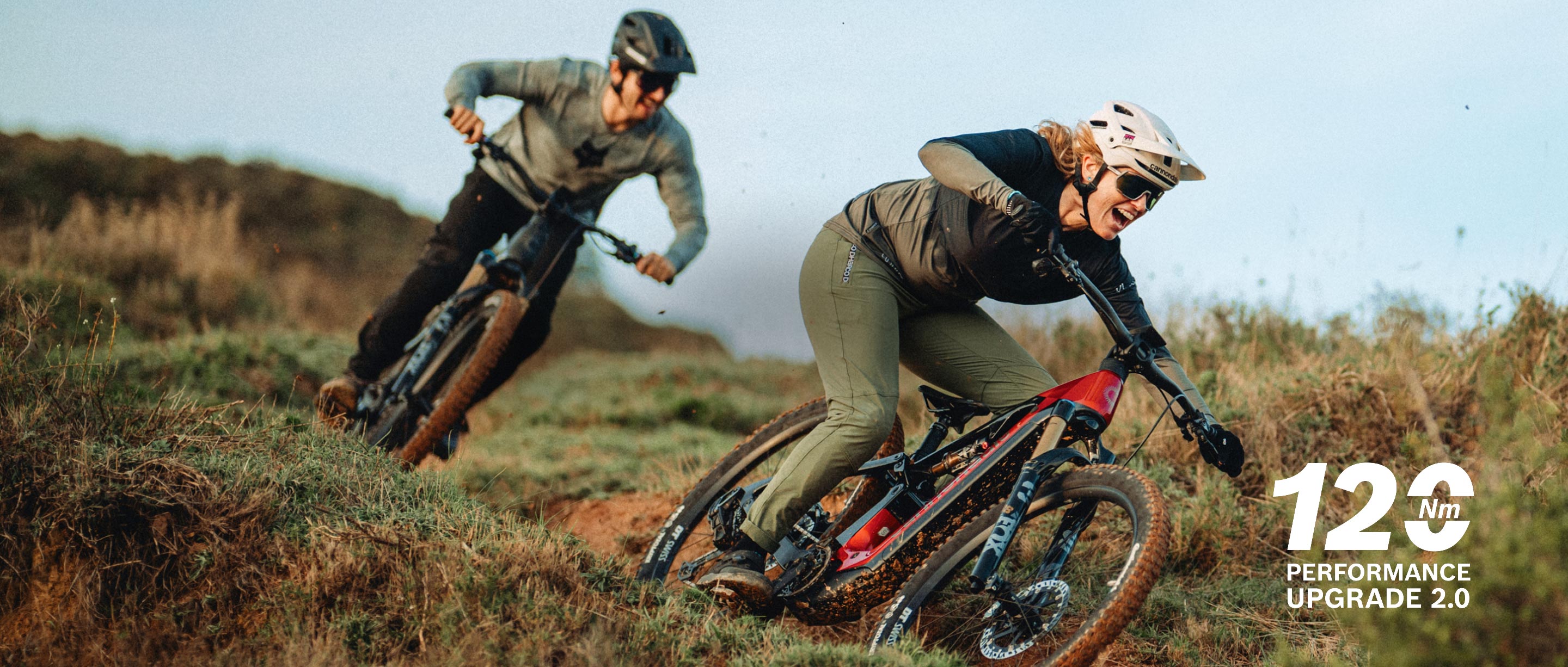
For the right rider, a modern e-bike is one of the most life-changing pieces of kit cycling has produced — and load-shedding is a non-issue for charging. It loses marks only on price and theft risk, both of which are real and specific to our market. Buy a big-brand motor, insure it, lock it properly, and it's worth it.
The honest ledger (editorial)
- Turns SA's brutal climbs and long backcountry routes into all-day fun
- Charging is cheap and load-shedding-proof — a charger sips ~150-250W
- Now clearly legal as a pedelec; no licence or registration needed
- Lightweight systems (TQ, Specialized SL) ride like a normal bike, just better
- Bosch / Shimano / Specialized have real dealer support and spares here
- Expensive — entry full-power e-MTBs start where good analogue bikes end
- A high-value, high-theft target; insurance and a serious lock are mandatory
- Battery replacement is a major cost down the line
- Heavy: a full-power e-MTB is ~23-26kg to lift onto a rack or hike up
- Direct-import no-name motors can be unserviceable in SA — avoid them
FAQ
Can I charge my e-bike during load-shedding? +
Easily. An e-bike charger draws only around 150-250W — far less than a kettle — so even a small inverter, UPS or portable power station runs it. A full charge takes roughly 3.5-6 hours on a standard charger, and you don't need an uninterrupted block to bank useful range.
Do I need a licence to ride an e-bike in South Africa? +
Not for a normal pedelec. If the motor is rated at 250W or less, only assists while you pedal, has no throttle and cuts off at 25km/h, it's legally a bicycle — no licence, registration or roadworthy. Fast machines capable of 45km/h+ are now classed as motor vehicles and do need a licence and registration.
Full-power e-MTB or a lightweight system? +
Full-power (Bosch CX, Shimano EP801, Specialized Turbo 3.1) gives maximum climbing shove and range for big trail days, at 23kg+. Lightweight (TQ HPR50/HPR60, Specialized SL) keeps the weight near a normal bike and rides more naturally — better for fitter riders, e-gravel and anyone who hates lugging weight around.
How much range will I actually get? +
It depends hugely on mode, weight, terrain and battery size. Manufacturers quote optimistic figures (Specialized claims up to 130km on the Creo SL in Eco). On real SA singletrack in a higher assist mode, expect well under half a big claim — carry a range extender for long days.
Are spares and servicing a problem here? +
Not if you buy a mainstream motor. Bosch, Shimano and Specialized all have local dealer networks, diagnostics and parts. The danger is a cheap grey-import with a proprietary motor and battery — when it fails, there may be no local support and the battery alone can cost a fortune to replace.
Is an e-bike worth it if I'm a budget or weight-focused rider? +
Often no. If your budget is tight, a good analogue bike gives far more bike for the money. And if you're a sub-7kg road weight-weenie chasing Strava KOMs under your own steam, an e-bike isn't the tool. They shine for commuters, trail riders wanting more laps, and anyone managing injury, age or a big terrain gap with a riding partner.
Tap to vote — see how readers lean
Further reading
- Specialized Turbo Levo Gen 4 review — Electric Bike Report
- Bosch Performance Line CX vs Shimano EP801 — Bike Perfect
- TQ HPR50 e-bike motor review — Cycling Electric
- TQ HPR60 (2026): more power, same light weight — Bikerumor
- SA's speedy e-bikers now classified as motorists — Cape Town ETC
- Bicycle and e-bike insurance in South Africa — Cyclesure
In 2026 the case for an e-bike in South Africa is stronger than it has ever been: the motors are excellent, charging genuinely shrugs off load-shedding, and the law finally treats a pedelec as the bicycle it is. The two real catches are price and theft — both solvable with the right insurance, a serious lock and a mainstream motor you can actually get serviced here. If you're a commuter, a trail rider who wants more laps, or someone bridging a fitness or injury gap, it's money well spent. If you're chasing grams or watts under your own legs, keep your analogue bike. Just don't buy a no-name grey-import to save a few rand — that's the one decision you'll regret.


